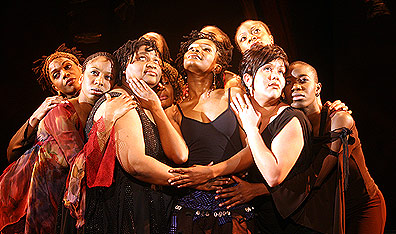
Together we are invincible: the cast of 'Da Kink In My Hair at the Princess of Wales Theatre. Courtesy Mirvish Productions.
In the theatre world, black is the new gay. Last season featured a bumper crop of gay and lesbian drama; this upcoming season witnesses a continued blossoming of plays by and starring African-Canadians.
For the third year in a row, Toronto’s mainstream CanStage Theatre Company has found space in its season for the redoubtable Jackie Richardson, casting the singer-actor in Crowns, a musical about African-American church ladies and the hats they favour.
“Jackie’s become the new Fiona Reid,” jokes actor-playwright Andrew Moodie, comparing Richardson to the CanStage stalwart.
Richardson is far from alone. Plays by and featuring black theatre professionals are playing for longer and on bigger stages than ever before. This past season, for instance, Trey Anthony’s ’Da Kink in My Hair, a drama set in a beauty parlour, packed Toronto’s Princess of Wales Theatre with more than 100,000 people during its three-month run. It was the first Canadian play to fill that house, and the second by a black writer to be programmed by Mirvish Productions in the last two years.
Black theatre veterans see a stark but happy contrast between the current state of affairs for performers, directors and playwrights of colour and the past, when there was no cross-cultural casting in mainstream Canadian theatres, few roles were written for black actors and black writers had little chance of seeing their work produced.
Belting it out: Jackie Richardson in Cookin' At the Cookery. Photo Shin Sugino. Courtesy CanStage.
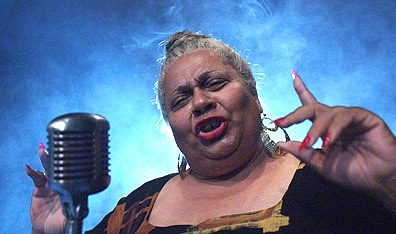
“When I started out in the 1970s,” Richardson recently told the National Post, “we [black actors] would have one or two projects to audition for each year. The whole community would show up for those.”
Another experienced performer, Philip Akin, recalls doing a lot of “yassuh, massah” acting parts to pay the bills, and spent a particularly bad summer in the late 1970s in Niagara-on-the-Lake playing a slave in the Shaw Festival’s production of Caesar and Cleopatra. “At the best of times, being black on the Niagara Peninsula in the summer is not a great thing,” he remembers. “Everyone assumed I was one of the Jamaican migrant workers brought up to work in the orchards. And the festival only cast me in that one show; God forbid they should use me in other ones in a non-slave part.” (The Shaw festival still comes in for a lot of criticism for its mainly white casting.)
Moodie started out at the Stratford Festival, but left after five months, when “someone in the office told me, ‘You know, Andrew, you’re never going to get to play a lead here.’”
But change was coming. A few theatres began to cast “non-traditionally,” in the phrasing of the day — that is, with less regard for skin colour. Leading the way were Regina’s Globe Theatre, the Young People’s Theatre in Toronto and Edmonton’s Citadel Theatre — after Robin Phillips took it over, post-Stratford. Karen Robinson, then a young Jamaican-Canadian actor just out of the University of Calgary’s theatre school, remembers the variety of roles Phillips gave her. “In Music Man, set in River City, Iowa [in 1912], I’d be wearing the period costumes and in a period hairstyle, up there singing and dancing and carrying on like everybody else. Then I’d get involved in the Spanish Revolution for Man of La Mancha. And then I’d be a lady-in-waiting in Hamlet — and the understudy for Gertrude.”
Casting directors often comment on the depth of black talent in acting centres across Canada. “After we did Lion King for a few years, I thought we’d seen most of what was out there, but a whole different crop of performers came out for ’Da Kink and The Adventures of a Black Girl in Search of God¸” says David Mirvish of Toronto’s Mirvish Productions, referring to the Djanet Sears play his company programmed in 2004.
Most observers attribute this depth to the American film industry, which, from the mid-’80s steadily employed black actors in Montreal, Vancouver and Toronto, albeit in secondary roles. “Every film Gregory Hines made in Toronto,” Akin says, “he found a part for me. I did Running with Michael Douglas — a hard part for me, since it literally involved a lot of running and I was a pack-a-day smoker. Movies of the week, sci-fi television series like War of the Worlds and The Highlander — you name it, I did it. I still get recognized in the States.”
By the early 1990s, there still wasn’t sufficient work available in the theatre; colour-blind directors like Phillips and the Factory Theatre’s Ken Gass were the exceptions, not the rule. Moodie, who was then trying to make his way as a performer, moved to Toronto, after landing some decent parts in Ottawa and Vancouver.
“There weren’t many roles, and what few there were, I just never seemed to get them. My girlfriend told me to stop whining and write something that I could play in.” The result was Riot, a play about the race-related fracas on Yonge Street in the wake of the Rodney King verdict. It played for two seasons at the Factory beginning in 1994 and employed Moodie and several other talented black performers. (Karen Robinson won a Dora for her bravura performance. “She just owned the stage,” Moodie says.)
“If you’re waiting for someone else to write your story, you might as well forget it,” says Trey Anthony. “Now I come across a lot of young black women who are writing, because they think, ‘If I want to appear in a play that I’m proud of, then I have to make it happen.’” Anthony still doesn’t feel the promised land has been reached. “You know, it’s still the same, for all of the success some of us are having now. The mainstream theatres still do a lot of token roles, putting you in to add a dash of colour, which makes them look good.”
Return to Africville: Lili Franks, Shakura S'Aida and Abena Malika in Consecrated Ground. Courtesy Obsidian Theatre Company.
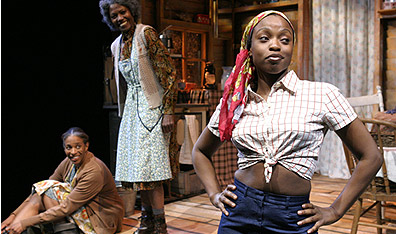
In addition to writing their own plays, several leading black theatre types banded together at the turn of the millennium to form their own theatre company, Obsidian. Over the last half-decade, the company’s two biggest successes have been productions of The Adventures of a Black Girl in Search of God and George Boyd’s play Consecrated Ground, about the now-defunct Africville neighbourhood of Halifax. In a show of strength for its fifth annual production, this winter Obsidian is producing, for the first time, a play written by a white author: Colleen Wagner’s The Monument. A Governor-General’s Award winner in 1996, the drama focuses on the atrocities committed in an unidentified war-torn country.
At the time of its first production, audiences assumed the drama referred to the former Yugoslavia; by casting Yanna McIntosh as the lead and other black actors in supporting roles, Obsidian’s artistic director Alison Sealy-Smith says the assumed setting is shifted to Rwanda, or possibly Sudan. “We’ve done plays by black authors exclusively before. But we’re a Canadian company, and this is a Canadian play, one with major implications for how we view places like Africa,” Sealy-Smith says. “With Live 8 and so on, we thought, this is on everyone’s minds. Why not?”
Like Anthony, Sealy-Smith is pleased with the increase of black material in mainstream theatres, but is skeptical about the motives. “I don’t think theatre is ahead of the curve, in terms of responding to our society’s changing demographics. The establishment artistic directors are going, ‘Our people, our audiences, are getting old and all the young people are looking kind of, um, browner.’” She pauses, then finishes her thought. “The whole country is changing and the theatre is just panting away behind it, just trying to keep up with the change.”
Alec Scott is a Toronto playwright and theatre critic.
THOM ALLISON
 Photo Helen Tansey. Courtesy Talent House. |
Current project(s): Playing Cinderella’s Prince in the Stratford Festival’s production of Into the Woods, Allison and Laird Mackintosh regularly stop the show with their duet Agony. The former also has a supporting role in Stratford’s Hello, Dolly!
TREY ANTHONY
TREY ANTHONY
TREY ANTHONY
Highlight Reel: Born in the U.K. to Jamaican ex-pat parents, Anthony came to Canada in her ’tweens and cut her teeth as a stand-up comedian, appearing regularly at Yuk Yuks’ monthly all-black comedy night. Carleen the Dancehall Queen, a character she created for her sketches there, morphed into Novelette, a coiffeuse who can tell everything about her clients by their hair. Played by Anthony, Novelette is the lead character in ’Da Kink in My Hair, a musical drama about the African-Canadian women who visit Novelette’s salon. The soap-operatic piece has experienced a meteoric rise since its 2001 debut at the Toronto Fringe Festival, jumping first to a well-received run at the New York Fringe in the same year, then a short engagement at Theatre Passe Muraille in 2003 and, finally, a 14-week run at the Mirvishes’ Princess of Wales Theatre this past winter.
Current Project(s): Adapting ’Da Kink in My Hair for television, as well as readying it for its stateside theatre debut this fall at San Diego’s Repertory Theatre in advance of a possible New York off-Broadway run.
GEORGE BOYD
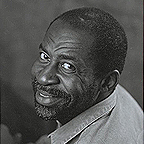 Courtesy George Boyd. |
Current project(s): At work on a new script.
ahdri zhina mandiela
Highlight Reel: The Jamaican-born multidisciplinary artist — she’s a published poet, filmmaker and dancer — and sworn enemy of upper-case letters has lately focused on directing small-budget theatre, including Trevor Rhone’s Two Can Play for Obsidian this spring in Toronto. Her documentary, on/black/stage/women, looks at the leading black women theatre artists in the country, including Jackie Richardson and Djanet Sears. Two annual theatre festivals she runs in Toronto aim to incubate young black talent.
Current project(s): Directing Anthony Winkler’s farce The Burglary, about a Jamaican ex-pat husband and wife who retire to a dream house on the island, only to have a thief attempt to spoil their idyll.
YANNA McINTOSH
 Photo John Lauener. Courtesy Volcano/Buddies in Badtimes Theatre. |
Current project(s): Shooting episodes of CBC’s This Is Wonderland, in which she has a recurring role, and preparing for Obsidian’s production of The Monument.
ANDREW MOODIE
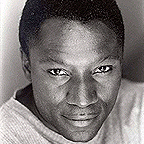 Courtesy Noble Caplan Abrams. |
Current project(s): Rehearsing his role as the Player King in Soulpepper’s Hamlet; polishing his most popular play, 1999’s A Common Man’s Guide to Loving Women, in advance of a November run at the Firehouse Theatre in Richmond, B.C.; prepping The Real McCoy for its Toronto run this winter at the Factory Theatre.
JACKIE RICHARDSON
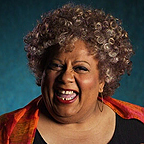 Courtesy CanStage. |
Current project(s): Preparing to star in CanStage’s production of Crowns.
KAREN ROBINSON
 Courtesy Obsidian Theatre Company. |
Current project(s): Breathing out after an early summer run of Jamaican playwright Trevor Rhone’s Two Can Play in Toronto.
ALISON SEALY-SMITH
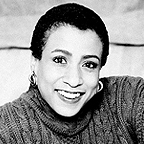 Courtesy AMI Artist Management Inc. |
Current project(s): Producing Pusha Man/Born Ready, Joseph Jomo Pierre’s plays about black urban youth, at Toronto’s Theatre Passe Muraille.
DJANET SEARS
Highlight Reel: A Londoner of Caribbean descent, Sears moved in childhood from the U.K. to Saskatoon to Oakville, Ont. As an adult, she has pursued a dual career as both an academic (currently an adjunct professor at the University of Toronto) and a dramatist. Her 1997 play, Harlem Duet — written as a prequel to Shakespeare’s Othello — won the Governor-General’s Award for drama, and The Adventures of a Black Girl in Search of God had the longest streak of any black Canadian play, running for 26 weeks at Toronto’s Harbourfront Centre in 2003 and 2004. Sears has also edited two anthologies of African-Canadian plays and recorded a couple of CDs of her favourite lullabies.
Current project(s): At work on a new play.More from this Author
Alec Scott
- Crowd Pleaser
- Sizing up Toronto's new opera house
- Write of Passage
- Madeleine Thien's quest for Certainty
- Happy Birthday, Bob
- Sixty-five quotes about Dylan
- Unscripted
- Tara Rosling follows her instincts
- Small World
- Books offer history in a nutshell


