PHOTO ESSAY
Bring the Noise
The evolution of portable audio
By Matthew McKinnon


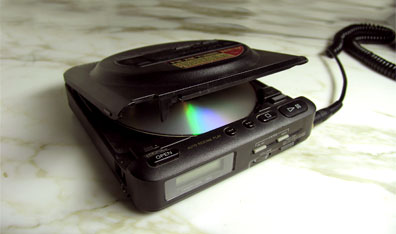 Photo by open.inc |
The Discman, 1984
Philips and Sony begin mass-producing compact discs in 1982, marketing the new format as an upgrade over vinyl, which degrades with repeated use, and hiss-cursed cassettes. Early public reaction is muted. While wafer-thin, pocket-sized CDs are portable, their players are most definitely not. (Philips’ 1978 prototype — the “Pinkeltje,” named for a gnome in a Dutch children’s story — required one cubic metre of electronic guts.) The world awaits a reason to get over the Walkman.
That reason arrives in 1984, when the head of Sony’s audio division challenges his staff to create a CD player shrunk to the dimensions of four stacked jewel cases. Result: the D-50, a portable player that is bare bones at best — it lacks even a repeat function — but sells for less than half the cost of Sony’s existing desktop model.
Sales soar. A wave of copycats follow, with Sony’s competitors slashing their prices to catch the D-50’s momentum. Music labels expand their CD stocks from dozens to hundreds to thousands of titles. In the coming years, the Discman supplants the Walkman in the ongoing battle for mobile pop supremacy.

More from this Author
Matthew McKinnon
- The Smackdown
- This week: Is U2 over?
- Can't Stop, Won't Stop
- The unretirement of Jay-Z
- Twos of a Kind
- François Brunelle’s look-alike portraits
- Behind the Music, Y'all
- Kevin Federline's Playing with Fire: the liner notes
- See No Ego
- A doc reveals the amazing story of the blind mountaineers of Tibet