



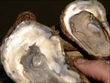


Jim Crawford and Dave Tupper invested their families’ life savings in a dream to produce oysters for the big fish markets in Toronto and Boston. It seemed like a sure bet when they set up their enterprise in the Bras d’Or Lake in Cape Breton for oysters have thrived naturally there. Jim considered the area as “the greatest oyster-growing grounds in the world”. Both men had left successful careers and they saw this as a great place to spend the rest of their days and to provide employment in a depressed area. But their dream crashed when a nasty little invader infected the shellfish, eating them from the inside out.
This invader had never been seen before in Canada and after six weeks of testing the invader got a name – MSX, a microscopic parasite. It’s harmless to humans but devastating to oysters and when it hits an area it can wipe out ninety-five percent of this shellfish. Just ask fishermen in the Chesapeake Bay area between Virginia and Maryland who have been wrestling with the parasite for fifty years.
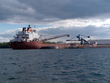
The invasion caught Jim and Dave by surprise but not the Nova Scotia Ecology Action Centre. In 2002 it warned Transport Canada about the risk of MSX invading Canadian waters particularly the Bras d’Or Lake because ships from Chesapeake Bay regularly come into the lake to pick up gypsum. Parasites can be carried in ballast water that is discharged as the ship is loaded. Two months after this warning, the parasite showed up in the lake.
While the federal government wrestles with regulations to try to prevent this kind of invasion in the future, the Crawford and Tupper families wrestle with their own future. It’s difficult to start all over again when one is close to retirement and one’s saving’s have been destroyed by a marine

