

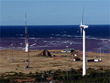





During the twentieth century fossil fuels took over one of the most important sources of power in the Maritimes. Wind power fell out of favor as coal and gas and oil became the fuel that generated movement and industry. Now in the twenty -first century wind power is on the scene again but in a very sophisticated guise; hi-tech, wind sensitive turbines. With fingers pointed at fossil fuels as the source of global warming and environmental damage, wind is being rediscovered as a source of clean energy.
It's not surprising that the first commercial wind farm in the Maritimes is found on Prince Edward Island. Without their own source of hydro or fossil fuel generated power, Islanders. have always had to buy their electricity off the island. But now at North Cape on the northwest tip of the Island, there are eight turbines generating enough power for 2,500 homes. However the users have to pay a premium to get this green power.
To dairy farmer, Kim Boulter, the higher electric bill is a small price to pay for supporting a home-grown source or power. However this upsets some advocates of clean power who argue that people shouldn't have to pay more for power that doesn't pollute; that the premium should be paid for power that causes environmental damage. How power utilities price the cost of power from different sources is one of the issues examined in the program.
The cost of electricity from wind has dropped 80 percent in the last decade. However, the way energy accounting is done at the moment, it still appears to be more expensive than the cost of fossil fuels. In European countries where fossil fuels are more expensive, wind power has grown into a huge industry. Those who went through that change found that it was not difficult. That wind power integrates smoothly, there are no power outages and there is no fear of running out wind unlike oil. For these reasons supporters of wind power would like to see more support from maritime governments which could mandate a percentage of electricity be generated from wind.

