




Lobster is the economic backbone of the fishery off Canada's east coast; a six hundred million dollar a year industry with one and half billion dollars with all the spinoffs. So anything that threatens this popular crustacean threatens thousands of people. So when a mysterious shell disease started showing up on lobsters caught along the coasts of Connecticut, Rhode Island and Southern Massachusetts, Land and Sea decided to take a closer look.
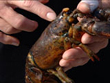
Mike Marchetti catches lobster off Rhode Island. He says in 1996 he noticed lobsters with freckles on their shells. Then the disease took off in 1997 where it was eating into the shells to the extent that in some cases, the flesh was exposed. Since then his catch has dropped about 40% and a quarter of the fishermen in his area have been driven out of business, others are barely hanging on.
Marine scientists say it's the first time they've seen massive amounts of disease in wild crustaceans. They don't know for sure what causes the shell disease but it involves several groups of bacteria. There appears to be always a low level of natural shell disease but what is worrisome, is they don't know why there's been a shift from a passive low incidence to an aggressive high incidence of the disease. They can't duplicate the disease in their labs so their suspicion is that something in the marine environment is affecting the lobster's immune system to the extent it can't fight the disease.
A few diseased lobsters have shown up in Maine waters not far from Canada. Many Canadian fishermen are hoping the cold water that surrounds their coast will protect their lobster but scientists say that bacteria can adapt and resist low temperatures. While many people are in a "wait and see" attitude, Canadian scientists are collaborating with their American colleagues to try to find the cause of shell disease before more fishermen go out of business.

