


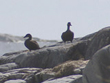



About eight miles off Newfoundland’s northern peninsula are the remote and exposed Grey Islands. No humans live here now but they are home to an abundance of wildlife, especially seabirds. But all it not well on the Grey Islands. During the past breeding season about four thousand eider ducks returned to the islands to build nests and lay their eggs but that number is very low compared to years ago.
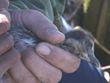
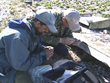
So Ducks Unlimited have come to the Grey Islands to try to find out what’s going on. A small group of local people led by a biologist camped out on the island for three and a half months to conduct field work. Among them was Eddie Pilgrim. Back in 1987 he took eggs from Grey Island and he and his wife hatched out a hundred eider ducklings in their basement, banded them and released them back to the wild. It was a first for Eddie and Ducks Unlimited. The venture this time is another first; banding ducks in the wild. They hope that by banding they’ll be able to determine how many ducks return to the Grey Island to breed and how old they are. Banding in the wild is a sensitive issue though for it means intruding on the ducks’ breeding grounds and exposing the eggs and the young to their biggest predators, the gulls.
Ducks Unlimited has built nesting boxes that can give the young some shelter and the field workers try to do the work minimizing their exposure. Even without the added disturbance by human presence, the survival rate of young eiders ducks is dismal. Gulls can take out 80 to 90 percent of them.
Yet the field workers hope their work will add to the information that will help figure out why the eider duck numbers are dropping is if there is anything that can be done to help improve their survival rate.

