

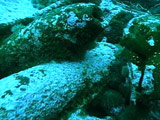

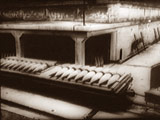
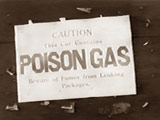
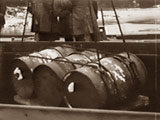
After the Second War the military had to figure out how to get rid of tons of unused and unwanted weapons. At the time, according to conventional wisdom the easiest and most sensible way to achieve this was to dump the surplus into the ocean. That decision has now become the source of worry and frustration on Canada’s coast where huge dumpsites of both chemical weapons and explosives sit corroding on the ocean floor.
Government nautical charts show some of these dangerous dumpsites but Myles Kehoe is convinced that there are many more sites not shown on these charts and he’s very upset about that. Kehoe, an antiques dealer from Cape Breton, says he’s very worried about family members and friends who are fishermen or oilrig workers who could be in danger if they don’t know where these sites are to avoid them.
If fishermen hauled up a barrel of mustard gas in their nets, they could be seriously injured by this vicious chemical.. Fortunately this has not happened in spite of the tons of mustard gas that were dumped off the east coast. Many European fishermen have not been so lucky where hundreds of barrels of the gas have been hauled up in their nets and some of them were seriously injured. Left alone these barrels will corrode and when the gas mixes with seawater it will form a harmless alcohol and hydrochloric acid that will quickly dilute in the ocean. Myles wants all these sites marked on nautical charts so fishermen can avoid those areas.
As awful as mustard gas is, conventional munitions may be worse. When the casings corrode, toxic chemical leak out. We don’t know what affect the chemicals will have on the environment, but they are certainly hazardous to people and they could persist in sediments and move up the food chain.
The Department of National Defense says it’s having a close look at shipwrecks and dumps where munitions are lying on the ocean floor trying to find out where they are and which ones are dangerous. But Myles Kehoe is concerned that they are not investing enough money in this effort and that they are moving much too slowly. He claims he will continue his fight until every single site is marked.

